Overview: February 2026 Automotive Retail Performance
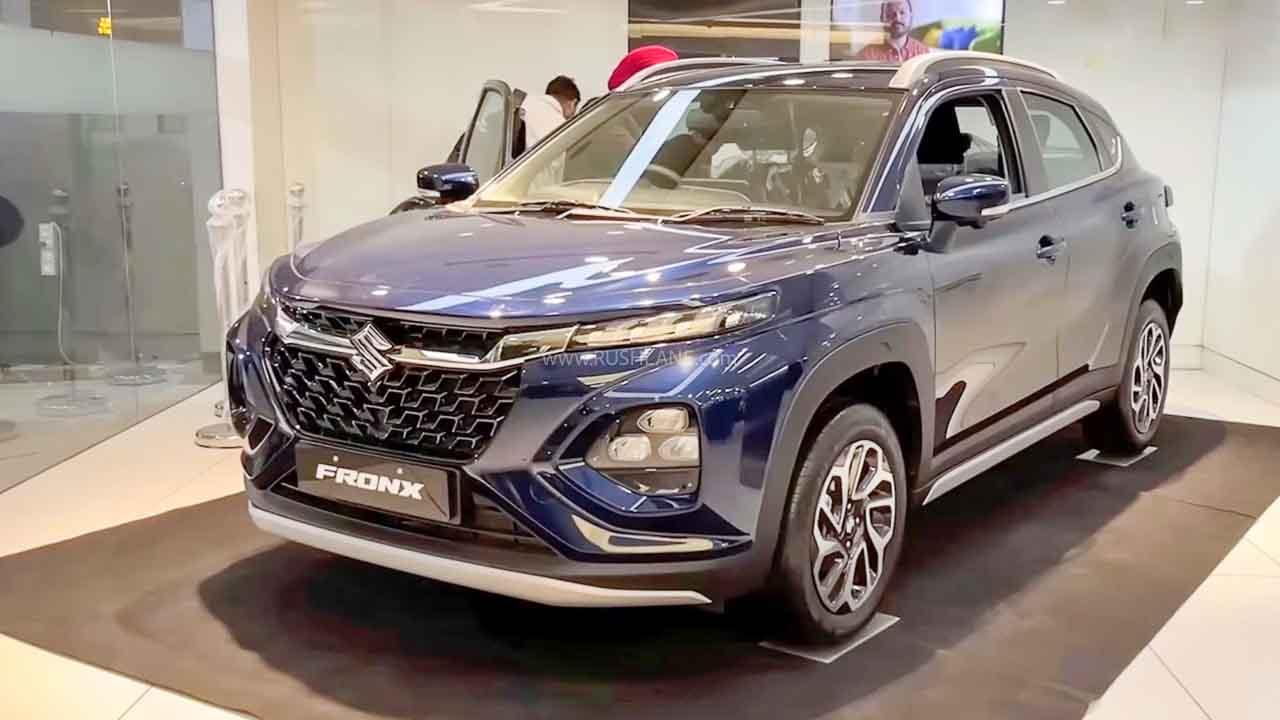
India Car Retail Sales Report February 2026: 26% YoY Growth Amidst Shifting Market Dynamics
Image: India Car Retail Sales Report February 2026: 26% YoY Growth Amidst Shifting Market Dynamics – Performance and Specifications
Advertisement
The Indian automotive landscape continues to showcase remarkable resilience and appetite for growth. In February 2026, the Passenger Vehicle (PV) segment recorded a staggering retail volume of 3,94,768 units. When compared to the 3,13,015 units sold in February 2025, this represents a massive 26.12% Year-on-Year (YoY) growth. While the headline numbers are celebratory, a closer look reveals a Month-on-Month (MoM) dip, signaling a natural correction after the high-inventory push seen in January 2026.
As of 2026, the entry-level price point for a reliable passenger vehicle starts at approximately ₹5.99 Lakh, stretching up to ₹55 Lakh for premium mass-market SUVs. This price range reflects the inflationary pressures and the mandatory inclusion of advanced safety features like 6 airbags and ADAS across mid-spec variants.
Advertisement
The Driving Forces Behind the 26.12% YoY Growth
The exponential growth seen in February 2026 isn’t a fluke. It is the result of several converging factors. Firstly, the ‘SUV-fication’ of the Indian market has reached its peak, with SUVs now accounting for nearly 56% of total retail sales. Secondly, the improved availability of semiconductors—a ghost of the past—has allowed OEMs to maintain a healthy flow of inventory to dealerships.
Analyzing the Month-on-Month (MoM) Sales Dip
Despite the YoY success, the MoM decline suggests that the post-festive and new-year rush is cooling off. Dealers have reported a slight increase in inventory days, moving from an average of 35 days in 2025 to 42 days in early 2026. This dip is also attributed to consumers waiting for the upcoming fiscal year-end discounts typically seen in March.
Design and Performance Trends in 2026
In 2026, aesthetics have shifted towards ‘Futuristic Minimalism.’ We are seeing more connected LED light bars, hidden door handles, and aerodynamic silhouettes even in the sub-4-meter segment. Performance is no longer just about 0-60 km/h times; it’s about the ‘Hybrid Harmony.’ Strong hybrids have become the preferred choice for long-distance commuters, offering diesel-like efficiency with petrol refinement.
Advertisement
Interior Technology and Connectivity
The 2026 cabin is a digital sanctuary. Standard features now include 12.3-inch dual screens, 5G-enabled connected car tech, and AI-based voice assistants that can control everything from the sunroof to tire pressure monitoring. High-fidelity 10-speaker systems are no longer reserved for luxury brands, as Tata and Mahindra have standardized them in their top-tier trims.
Safety Standards: The Bharat NCAP Influence
Safety is the primary metric for Indian car buyers in 2026. With Bharat NCAP (B-NCAP) ratings becoming a household topic, manufacturers are racing to achieve 5-star ratings. Electronic Stability Control (ESC), Hill Hold Assist, and ISOFIX mounts are now standard across 90% of the passenger vehicle fleet sold in February 2026.
Comparative Analysis: Leading Segments of 2026
To understand the market better, let’s look at how the top three segments—Compact SUVs, Mid-size SUVs, and Premium Hatchbacks—performed against each other this month.
Advertisement
| Segment | Best Seller (Feb 2026) | Avg. Waiting Period | Market Share |
|---|---|---|---|
| Compact SUV | Maruti Brezza / Tata Nexon | 4-8 Weeks | 32% |
| Mid-size SUV | Hyundai Creta / Mahindra XUV700 | 12-20 Weeks | 24% |
| Premium Hatchback | Maruti Baleno | 2-4 Weeks | 12% |
Technical Specifications of Market Leaders
The following table outlines the general technical capabilities of the vehicles driving the 26% YoY growth in 2026.
| Feature/Spec | Petrol (Turbo) | Strong Hybrid | Electric (EV) |
|---|---|---|---|
| Engine/Battery | 1.2L – 1.5L Turbo | 1.5L Atkinson Cycle | 40kWh – 60kWh |
| Power Output | 110 – 160 PS | 115 – 130 PS (Combined) | 140 – 200 PS |
| Fuel Efficiency / Range | 16-18 kmpl | 25-28 kmpl | 400-550 km (MIDC) |
| Transmission | 6MT / 7DCT | e-CVT | Single Speed |
Variant-Wise Pricing Analysis (2026 Average)
Below is the average ex-showroom pricing for the most popular vehicle categories in February 2026.
| Category | Entry Variant (Ex-Showroom) | Top Variant (Ex-Showroom) |
|---|---|---|
| Micro-SUV | ₹6,40,000 | ₹10,50,000 |
| Compact SUV | ₹8,99,000 | ₹16,50,000 |
| Mid-size SUV | ₹11,50,000 | ₹22,00,000 |
| Executive Sedan | ₹12,00,000 | ₹19,50,000 |
People Also Ask (FAQs)
1. Why did car sales grow by 26% YoY in Feb 2026?
The growth is driven by a massive shift toward SUVs, better financing options with flexible EMI schemes, and a surge in the replacement cycle for vehicles bought during the 2018-2019 period.
Advertisement
2. Why was there a MoM dip in February 2026?
The MoM dip is largely due to high sales in January (new year registrations) and consumers delaying purchases to catch end-of-financial-year deals in March.
3. Which brand sold the most cars in February 2026?
Maruti Suzuki remains the market leader, followed closely by Hyundai and Tata Motors, who are battling for the second spot.
4. Are Electric Vehicles (EVs) included in these retail figures?
Yes, the 3,94,768 units include all passenger vehicles (ICE, Hybrid, and EV) registered through the Vahan portal.
Advertisement
5. What is the average waiting period for an SUV in 2026?
Depending on the model, the waiting period ranges from 2 months for compact SUVs to 6 months for high-demand models like the Mahindra Scorpio-N or XUV700.
6. Is it a good time to buy a car in early 2026?
While YoY growth is high, buyers might find better discounts in March due to the MoM sales dip and dealer stock clearance.
7. How have hybrid car sales performed this month?
Strong hybrids have seen a 40% growth within the PV segment as consumers seek alternatives to rising fuel costs without the range anxiety of EVs.
Advertisement
8. What are the mandatory safety features in cars sold in 2026?
Mandatory features include 6 airbags, ABS with EBD, ESC, and rear parking sensors. Most top-selling cars also now boast 4 or 5-star B-NCAP ratings.
9. Did luxury car sales also see growth in February 2026?
Yes, the luxury segment (BMW, Mercedes-Benz, Audi) saw a 15% YoY growth, contributing significantly to the overall retail value.
10. What is the outlook for the rest of 2026?
The outlook remains ‘Positive.’ Analysts predict that total PV sales for the 2026 calendar year could cross the 4.5 million mark if the monsoon remains favorable and interest rates stabilize.
Advertisement
Verdict: Should You Buy Now or Wait?
The February 2026 data reflects a robust market. If you are looking for a popular SUV, buying now avoids the potential price hikes usually announced in April. However, if you are looking for a hatchback or a slow-moving sedan model, waiting until the March year-end clearance could save you significantly in insurance and loyalty bonuses.
Pros: Wide variety of tech-loaded models, high safety standards across segments, and stable interest rates.
Cons: High waiting periods for top-spec variants and increasing insurance premiums due to higher third-party rates.
Advertisement