The Resurrection of an Icon: Honda’s 2026 Heritage Initiative
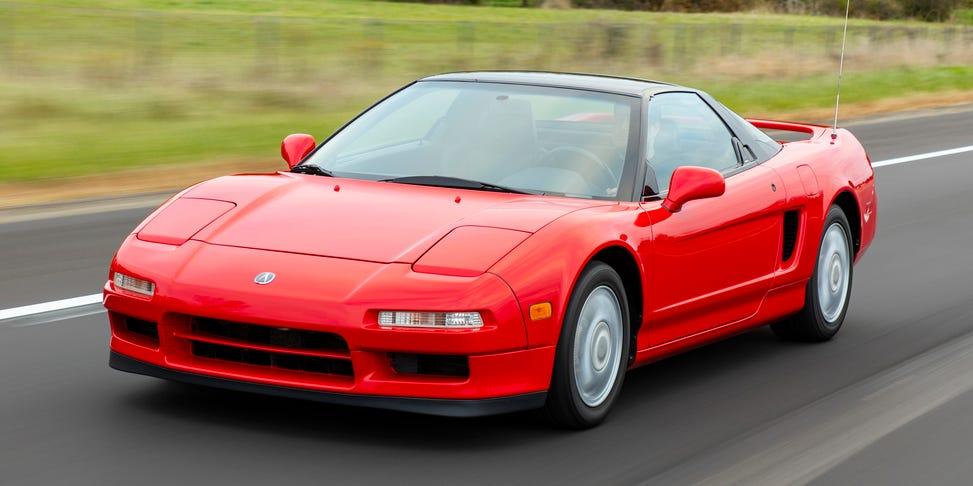
Honda Revives the Legend: First-Gen NSX Heritage Parts Program & 2026 Updates
Image: Honda Revives the Legend: First-Gen NSX Heritage Parts Program & 2026 Updates – Performance and Specifications
- Advertisement -
For decades, the first-generation Honda/Acura NSX has been hailed as the ‘everyday supercar,’ a machine that combined Ferrari-beating performance with Civic-like reliability. However, as these mid-engine marvels approach their 35th anniversary, owners have faced a mounting crisis: the scarcity of genuine parts. Entering 2026, Honda has officially addressed this by expanding its Heritage Parts Program. If you are looking to restore a 1990-2005 NSX today, the entry price for a well-maintained chassis starts at roughly $100,000, but the value of a ‘factory-refreshed’ model is skyrocketing toward the $200,000 mark.
The Strategy Behind the 2026 Heritage Launch
Honda’s decision to reproduce parts for the NA1 and NA2 generations isn’t just about nostalgia; it is a calculated move to protect the brand’s performance legacy. Similar to the programs run by Mazda for the Miata and Nissan for the Skyline GT-R, Honda is utilizing original tooling—and in some cases, modern 3D printing and advanced metallurgy—to recreate components that have been discontinued for over a decade. By 2026, the catalog is expected to include over 300 individual part numbers, ranging from critical engine seals to aesthetic interior trim pieces.
- Advertisement -
Performance Maintenance: Keeping the V6 VTEC Screaming
The heart of the first-gen NSX is its C30A or C32B V6 engine. In 2026, the focus of the reproduction program is on the cooling system and high-wear internal components. Owners have long complained about ‘Snap Ring’ failures in early transmissions and brittle cooling hoses that lead to catastrophic engine failure. Honda’s new parts use modern rubber compounds and reinforced alloys that exceed the original 1990 specifications, ensuring these cars remain road-legal and track-ready for the next fifty years.
Engineering Precision and Reliability
Unlike third-party aftermarket solutions, Honda’s reproduction parts undergo the same rigorous NCAP-adjacent safety testing as modern vehicle components. For 2026, the highlight is the re-release of the original aluminum suspension arms. These parts are notoriously difficult to repair if bent, and the new production run ensures that the NSX’s legendary handling remains untainted by inferior substitutes.
| Feature | NSX NA1 (1990-1996) | NSX NA2 (1997-2005) |
|---|---|---|
| Engine Type | 3.0L V6 VTEC | 3.2L V6 VTEC | Horsepower | 270 hp @ 7,100 RPM | 290 hp @ 7,100 RPM | Torque | 210 lb-ft | 224 lb-ft | Transmission | 5-Speed Manual / 4-Speed Auto | 6-Speed Manual | Chassis Material | Extruded Aluminum | Extruded Aluminum |
Interior Tech and Aesthetic Restoration
One of the biggest ‘Cons’ cited by owners on forums like NSX Prime is the ‘sticky dash’ and the failure of the climate control unit. As part of the 2026 rollout, Honda is reproducing the center console assembly and the HVAC control boards. While they look identical to the 90s originals, the internal electronics have been modernized to handle heat better, preventing the common screen bleed issues of the past.
- Advertisement -
The Competitive Landscape: 2026 Heritage Programs
How does Honda’s program stack up against other Japanese and European rivals? In 2026, the collector market is driven by ‘OEM Plus’ restorations. Below is a comparison of how Honda’s program compares to its closest competitors in terms of support depth and availability.
| Feature | Honda NSX Heritage | Nissan Nismo Heritage (R32-R34) | Porsche Classic (911/964) |
|---|---|---|---|
| Catalog Depth | High (300+ Parts) | Very High (500+ Parts) | Extreme (Full Catalog) | Restoration Service | Certified Partners Only | Factory Omori Factory | Porsche Classic Centers | Global Availability | Japan, USA, Europe | Mostly Japan | Worldwide | Price Point | Premium | High | Very High |
Estimated Pricing for 2026 Reproduction Parts
| Component Category | Estimated Price (Ex-Showroom/Dealer) |
|---|---|
| VTEC Solenoid Gasket Kit | $150 – $250 | Forged Aluminum Lower Control Arms | $1,200 – $1,800 | Complete Interior Carpet Set | $900 – $1,300 | OEM Reproduction Wheel (Per Unit) | $800 – $1,100 | Transmission Synchro Kit (6-Speed) | $2,500 – $3,200 |
People Also Ask (FAQs)
- Will these parts fit the Acura NSX sold in the USA? Yes, the parts are compatible with both Honda and Acura branded first-gen models.
- Can I order these parts directly from a Honda dealer? Yes, selected certified Honda and Acura dealers will handle Heritage catalog orders.
- Is Honda making new engines for the NSX? Currently, they are only producing internal components and blocks, not complete crate engines.
- What are the most common problems with the first-gen NSX? Main issues include the snap ring failure, window regulators, and ABS pump failures.
- Is the NSX Heritage Program available in India? While not officially launched in India, parts can be imported via Honda’s global logistics network.
- Why are these parts more expensive than aftermarket ones? They are built to original factory tolerances and retain the car’s resale value.
- Will there be a 2026 NSX successor? Rumors suggest a high-performance EV flagship is in development for a late 2026 debut.
- Does the program cover the NSX-R? Yes, specific lightweight parts for the Type-R are being prioritized.
- How does this affect the value of an old NSX? Values typically increase as ‘matching numbers’ OEM restorations become easier to achieve.
- Are body panels included? Yes, aluminum fenders and hoods are being considered for the next phase of production.
Verdict: Should You Invest in the Heritage Program?
If you are an owner or a prospective buyer of a first-gen NSX, this program is a game-changer. The ‘Cons’ of ownership—parts scarcity and sky-high maintenance—are being mitigated by Honda’s direct intervention.
Pros:
– Guaranteed fitment and OEM quality.
– Modernized materials for better durability.
– Significant boost to vehicle investment value.
- Advertisement -
Cons:
– Higher cost compared to generic aftermarket parts.
– Some high-demand parts may have long lead times.
Final Word: If you want your NSX to drive like it did in 1990, the Heritage Parts Program is the only way to go.
- Advertisement -