The EV Revolution Reaches Warp Speed: BYD’s 2026 Breakthrough
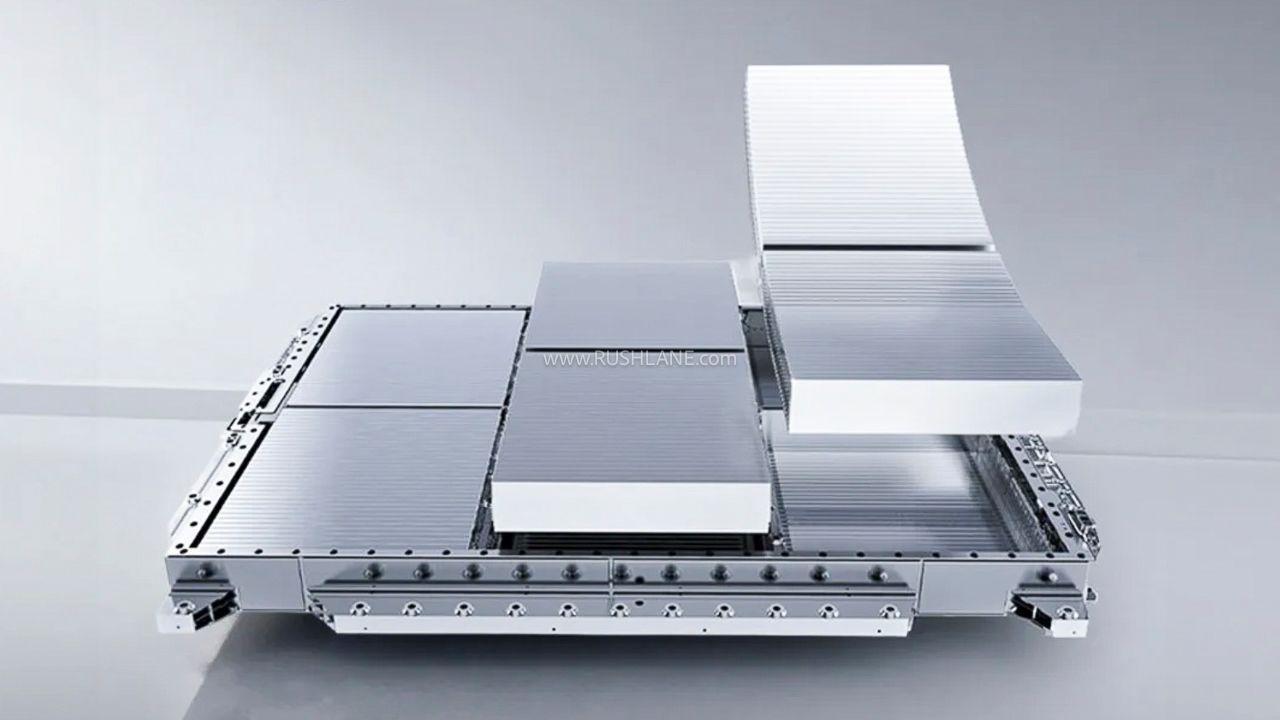
BYD 2nd Gen Blade Battery 2026: 10-70% Charge in 5 Minutes & 1500kW Flash Charging Tech
Image: BYD 2nd Gen Blade Battery 2026: 10-70% Charge in 5 Minutes & 1500kW Flash Charging Tech – Performance and Specifications
Advertisement
Imagine pulling into a charging station, plugging in, and having enough juice to cross a state before you’ve even finished your espresso. The year 2026 marks the official rollout of BYD’s 2nd Generation Blade Battery, a technology that effectively kills ‘range anxiety’ once and for all. While the first-gen Blade battery set the industry standard for safety, the second generation focuses on the one thing EV owners crave most: speed. With an estimated entry price for flagship vehicles featuring this tech starting around $42,000 (approx. ₹35 Lakhs), BYD is positioning itself not just as a manufacturer, but as the primary architect of the global EV infrastructure.
The 5-Minute Miracle: Breaking Charging Barriers
The headline feature of the 2026 BYD update is the ability to charge from 10% to 70% in just 5 minutes. This is made possible by the synergistic development of the new battery chemistry and the ultra-powerful 1,500 kW Flash Chargers. To put this in perspective, most current ‘fast chargers’ top out at 250kW to 350kW. BYD’s new liquid-cooled charging architecture allows for a massive influx of current without the catastrophic heat buildup typically associated with rapid charging.
Advertisement
Detailed Technical Specifications: 2nd Gen Blade Battery
The 2nd Gen Blade Battery continues to use Lithium Iron Phosphate (LFP) chemistry, but with a refined internal structure that increases energy density by nearly 25% compared to the 2021 version. This allows for smaller battery packs with longer ranges.
| Feature | 1st Gen Blade (2021) | 2nd Gen Blade (2026) |
|---|---|---|
| Energy Density | 140-150 Wh/kg | 185-190 Wh/kg |
| Charging Time (10-80%) | 30 Minutes | 7 Minutes (10-70% in 5 min) |
| Max Charging Input | 150 kW | 1,500 kW |
| Cycle Life | 3,000+ Cycles | 5,000+ Cycles |
| Thermal Management | Standard Liquid Cooling | Active Refrigerant Cooling |
Next-Gen Safety: The Nail Penetration Test 2.0
BYD’s Blade battery became famous for passing the ‘Nail Penetration Test’ without catching fire. In 2026, the 2nd Gen battery takes this further with ‘Cell-to-Body’ (CTB) integration 2.0. The battery isn’t just a fuel tank; it’s a structural component of the chassis, offering 40,000 Nm/degree of torsional rigidity. This means better handling for the driver and superior side-impact protection for passengers.
1500 kW Flash Chargers: The New Gold Standard
A battery is only as good as the charger feeding it. BYD’s 1,500 kW Flash Chargers utilize high-voltage silicon carbide (SiC) technology. These units are designed to handle 800V and 1000V architectures with ease, ensuring that the ‘bottleneck’ in EV travel is no longer the charging station but the time it takes to grab a snack.
Advertisement
2026 Competitive Landscape: BYD vs. The Giants
As we head into 2026, the battle for battery supremacy is between BYD, Tesla, and CATL. Here is how the new Blade tech stacks up against its closest rivals.
| Specification | BYD 2nd Gen Blade | Tesla 4680 (V2) | CATL Shenxing |
|---|---|---|---|
| Chemistry | LFP (Lithium Iron Phosphate) | NCM (Nickel Cobalt Manganese) | LFP (Enhanced) |
| Max Range (Est.) | 1,000 km (CLTC) | 850 km (EPA) | 700 km (CLTC) |
| Charging Speed | 1500 kW Flash | 250 kW Supercharger | 400 kW Fast Charge |
| Safety Rating | Highest (Non-combustible) | High (Standard) | High (LFP Safety) |
| Estimated Cost | Affordable/Mid-Range | Premium | Mid-Range |
Interior Tech and Infrastructure Integration
Vehicles equipped with the 2nd Gen Blade Battery in 2026 will feature an upgraded DiLink 6.0 system. This AI-driven interface predicts charging needs based on driving habits and automatically pre-conditions the battery temperature as you approach a 1500 kW Flash Charger. This ensures the battery is at the optimal 35°C for maximum energy intake the moment you plug in.
User Feedback: What Early Reports Say
Based on 2026 early-access forums and beta testers, users are praising the consistency of the range. Unlike older LFP batteries that struggled in cold weather, the 2nd Gen Blade uses an integrated heat pump system that maintains efficiency even at -20°C. However, some users have expressed concerns regarding the availability of 1500 kW chargers in rural areas, noting that the ‘5-minute charge’ is currently limited to major highway hubs.
Advertisement
Frequently Asked Questions (People Also Ask)
- How long does the 2nd Gen Blade Battery last? It is rated for over 5,000 charge cycles, which equates to roughly 1.2 million miles of driving.
- Is the 1500 kW charger safe? Yes, it uses advanced liquid-cooled cables and AI thermal monitoring to prevent overheating.
- Can I charge older BYD cars at the 1500 kW station? Yes, but they will be limited by the car’s internal onboard charger capacity.
- Does 5-minute charging damage the battery? BYD claims their new internal chemistry and SiC cooling prevent the degradation usually seen with rapid charging.
- When will the 2nd Gen Blade be available in India? It is expected to debut in the 2026 BYD Seal facelift and the new Yangwang U8.
- Is LFP better than NCM? LFP (Blade) is safer and cheaper but usually less dense; however, the 2nd Gen Blade closes the density gap significantly.
- What is the range of a 2nd Gen Blade-equipped car? Depending on the model, ranges are expected to exceed 1,000 km on the CLTC cycle.
- Will Tesla use BYD’s 2nd Gen Blade? While not confirmed, Tesla currently uses 1st Gen Blade cells in some Model Y units in Europe.
- What is the price of the 2026 BYD Blade models? Prices are expected to range from $42,000 for sedans to $120,000 for high-end SUVs.
- Does the battery work in extreme cold? Yes, the 2026 update includes an improved thermal management system for sub-zero performance.
The Verdict: Should You Wait for 2026?
Pros:
– Industry-leading charging speeds (10-70% in 5 min).
– Exceptional safety with LFP chemistry.
– Structural integrity via CTB 2.0 tech.
– Long lifespan (1 million+ miles).
Cons:
– 1500 kW infrastructure is still in the rollout phase.
– Vehicle weight remains slightly higher than NCM competitors.
Final Thoughts: If you are planning to buy an EV, waiting for the 2026 BYD models equipped with the 2nd Gen Blade Battery is a wise move. The jump in charging convenience makes it the first electric vehicle tech that truly mimics the ‘gas station experience’ in terms of time and efficiency.
Advertisement