Indian automotive landscape is about to witness a massive disruption as Renault India gears up for its second innings. After the massive success of the Duster and Kwid, the French automaker had been relatively quiet, but the silence was just the calm before the storm. Renault has officially announced a roadmap to launch 4 new models by 2030, with the first major offensive being the much-hyped Bridger SUV (based on the Bigster/New Duster platform).
The Renault Comeback: What to Expect?
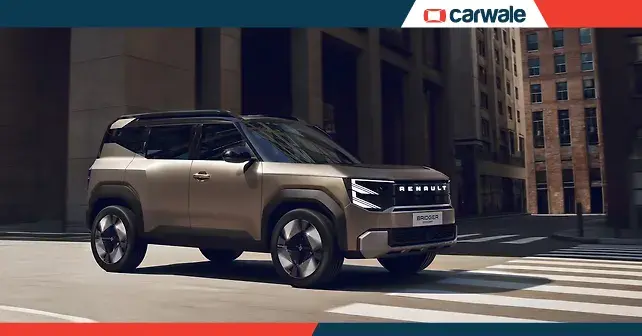
भारत में बड़ा गेम खेलने की तैयारी में रेनो! 2030 तक लॉन्च होंगी 4 नई कार्स: New Renault Bridger SUV 2026 Details
- Advertisement -
Image: भारत में बड़ा गेम खेलने की तैयारी में रेनो! 2030 तक लॉन्च होंगी 4 नई कार्स: New Renault Bridger SUV 2026 Details – Performance and Specifications
Renault’s strategy is clear: target the heart of the Indian SUV market. The brand is investing heavily in the CMF-B platform, which will underpin these new vehicles. The first model, expected to hit the roads by mid-2025 or early 2026, is the ‘Bridger’—a robust, feature-loaded SUV that aims to bridge the gap between mid-size SUVs and full-size family haulers. Expected starting price for the Renault SUV range is ₹12.50 Lakh, going up to ₹22 Lakh for the flagship variants.
- Advertisement -
Design Philosophy: Rugged Meets Modern
The upcoming Renault Bridger SUV takes inspiration from the Dacia Bigster concept. It features a high ground clearance, muscular wheel arches, and a distinctive Y-shaped LED lighting signature. Unlike the soft-roaders currently dominating the market, the Bridger aims to provide a ‘Go-Anywhere’ aesthetic. The front grille is expected to be integrated with sleek LED DRLs, while the rear will feature a sculpted tailgate and chunky skid plates.
Performance and Powertrain Options
Renault is moving away from diesel engines, focusing instead on turbo-petrol and hybrid technology. The 2026 lineup is expected to feature:
1. 1.0L Turbo Petrol: For the entry-level variants.
2. 1.3L Turbo Petrol: Developed with Mercedes-Benz, offering class-leading torque.
3. 1.2L Strong Hybrid: Targeting high fuel efficiency to rival the Grand Vitara and Hyryder.
Interior, Tech, and Comfort
Inside, the Bridger SUV will be a massive step up from previous Renault models. Users have often complained about ‘budget-grade’ plastics in older models; Renault is addressing this with soft-touch materials and a minimalist cockpit design. You can expect a 10.1-inch floating touchscreen infotainment system, a fully digital 7-inch instrument cluster, and premium upholstery. The ‘Bridger’ will also feature the ‘YouClip’ accessory system, allowing users to attach phone mounts or lights anywhere in the cabin.
- Advertisement -
Technical Specifications (2026 Model)
| Feature | Renault Bridger SUV (Expected) |
|---|---|
| Engine Type | 1.3L Turbo Petrol / 1.2L Strong Hybrid |
| Max Power | 156 bhp (Turbo) / 140 bhp (Hybrid) |
| Max Torque | 250 Nm |
| Transmission | 6-Speed MT / CVT / Dedicated Hybrid Transmission |
| Ground Clearance | 210 mm |
| Boot Space | 450+ Liters |
| Safety Rating | Targeting 4-5 Stars (Global NCAP) |
Comparison: Renault Bridger vs Rivals (2026)
The competition in 2026 will be fierce. Renault is positioning the Bridger directly against the segment leaders.
| Feature | Renault Bridger | Hyundai Creta (2026) | Mahindra XUV700 (5-Str) |
|---|---|---|---|
| Engine | 1.3L Turbo / Hybrid | 1.5L Turbo / EV | 2.0L Petrol / 2.2L Diesel |
| ADAS | Level 2 | Level 2 | Level 2 |
| Off-Road Capability | Mild AWD Expected | FWD Only | AWD Available |
| Fuel Efficiency | 18-22 kmpl (Hybrid) | 17-19 kmpl | 12-15 kmpl |
Variant-Wise Pricing (Ex-Showroom)
| Variant | Estimated Price (INR) |
|---|---|
| Renault Bridger RXE (Base) | ₹12.49 Lakh |
| Renault Bridger RXL | ₹14.20 Lakh |
| Renault Bridger RXT (Mid) | ₹16.80 Lakh |
| Renault Bridger RXZ (Top) | ₹19.50 Lakh |
| Renault Bridger Hybrid (Top) | ₹21.99 Lakh |
Safety and NCAP Ratings
Safety is no longer an option in India; it’s a necessity. Renault’s new CMF-B platform is designed to meet stringent global safety norms. The 2026 Bridger SUV will come equipped with 6 airbags, ABS with EBD, Electronic Stability Control (ESC), and a comprehensive ADAS suite including autonomous emergency braking and lane-keep assist. Renault aims for a minimum 4-star Global NCAP rating to regain consumer trust.
People Also Ask (FAQ)
- What is the launch date of the Renault Bridger in India? It is expected to launch in early 2026.
- Will the new Renault SUV have a diesel engine? No, Renault is focusing on Turbo-petrol and Strong Hybrid engines.
- What is the expected price of the 2026 Renault Duster/Bridger? Prices are expected to range from ₹12 Lakh to ₹22 Lakh.
- Does it have a panoramic sunroof? Yes, higher variants are expected to feature a panoramic sunroof.
- Is it a 5-seater or 7-seater? The initial launch will be a 5-seater, with a 7-seater version (Bigster) following later.
- What are the main rivals? Hyundai Creta, Kia Seltos, Maruti Grand Vitara, and Mahindra XUV700.
- What is the mileage of the Hybrid variant? It is expected to deliver around 22-24 kmpl.
- Will it have AWD? An electronic AWD system for mild off-roading is likely in the top-spec turbo variant.
- Is the CMF-B platform safe? Yes, it is a global platform used for several high-rated vehicles in Europe.
- How many new cars is Renault launching? Renault has confirmed 4 new models for India by 2030.
Verdict: Should You Buy It?
Renault’s upcoming 2026 lineup looks promising on paper. The ‘Bridger’ SUV addresses several complaints about previous models, particularly regarding interior quality and safety tech. If you are looking for a rugged SUV that stands out from the ‘urban-only’ crowd of Gretas and Seltos, the Renault Bridger is worth the wait.
- Advertisement -
Pros:
- Rugged European design language.
- Strong Hybrid engine for high efficiency.
- Solid CMF-B platform with high safety potential.
- Excellent ride quality (a Renault hallmark).
Cons:
- No Diesel option for heavy highway users.
- Renault’s service network is smaller than Maruti or Hyundai.
- Late entry into a highly crowded segment.