The Revolution of Three-Wheeled Mobility: 2026 Yamaha Tricity 300
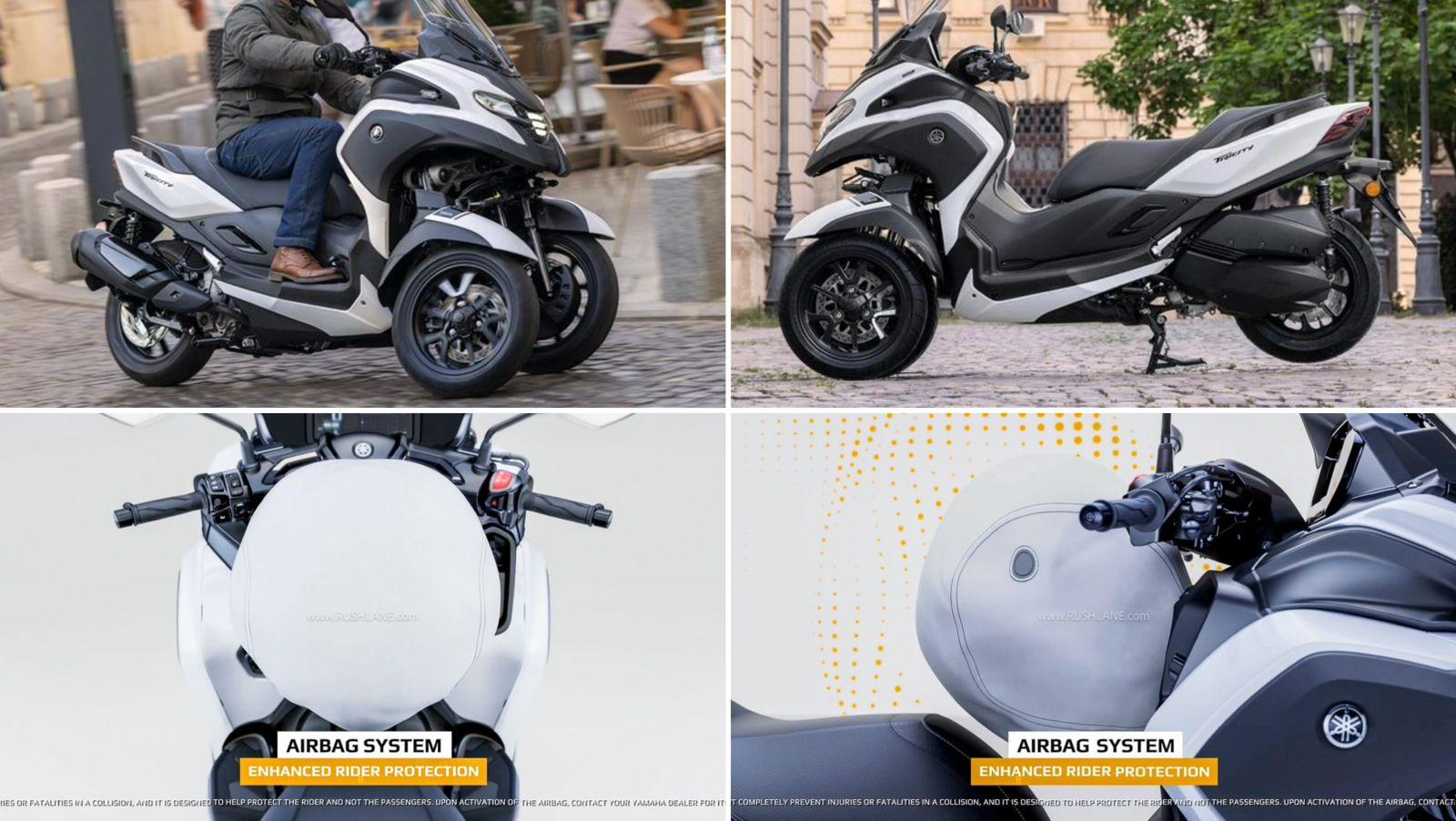
2026 Yamaha Tricity 300 Debuts: World’s First Airbag Scooter Set to Redefine Urban Safety
Image: 2026 Yamaha Tricity 300 Debuts: World’s First Airbag Scooter Set to Redefine Urban Safety – Performance and Specifications
- Advertisement -
Yamaha has officially pulled the wraps off the 2026 Yamaha Tricity 300, and it is not just another incremental update. This debut marks a historic milestone in the motorcycle industry as the Tricity 300 becomes the world’s first production scooter to feature an integrated airbag system. Aimed at the premium urban mobility segment, the 2026 model bridges the gap between the stability of a car and the agility of a motorcycle. While official pricing for the Indian market remains speculative (estimated at ₹8.50 Lakh to ₹9.50 Lakh if launched via CBU), the European market expects a starting price of approximately £8,400.
The Headline Act: Integrated Airbag Technology
Safety has always been the primary selling point for the Leaning Multi-Wheel (LMW) series, but the 2026 Tricity 300 takes it to the stratosphere. The newly developed airbag system is housed within the front leg shield. Utilizing a sophisticated network of sensors that monitor acceleration and impact forces across 360 degrees, the airbag deploys in milliseconds during a frontal collision, significantly reducing the risk of chest and torso injuries for the rider.
- Advertisement -
Design and Aesthetics: Sharper and Meaner
The 2026 model receives a significant styling overhaul. The ‘Twin Eye’ LED headlight assembly has been redesigned for a more aggressive, squinting look that aligns with Yamaha’s ‘MAX’ family DNA. The bodywork is now more aerodynamic, with sharper lines flowing from the front cowls to the rear tail unit. New colorways, including ‘Zenith Grey’ and ‘Midnight Black,’ emphasize the scooter’s premium positioning.
Chassis and Leaning Multi-Wheel (LMW) Tech
The core of the Tricity 300 remains its unique LMW Ackerman steering geometry. This system allows the two front wheels to lean in unison, providing incredible grip on slippery manhole covers, tram rails, and wet cobblestones. For 2026, Yamaha has refined the ‘Standing Assist System,’ which keeps the scooter upright when stopped at traffic lights, now operating with smoother engagement and disengagement transitions.
Performance and Powertrain
Under the sleek bodywork lies the tried-and-tested 292cc Blue Core engine. This liquid-cooled, 4-stroke, SOHC, 4-valve single-cylinder unit is optimized for Euro 5+ emissions standards. It delivers punchy low-end torque, making it ideal for overtaking in city traffic while maintaining enough top-end power for comfortable highway cruising at 110-120 km/h.
- Advertisement -
| Feature | Technical Specification |
|---|---|
| Engine Type | 292cc, Single-Cylinder, Liquid-Cooled, Blue Core |
| Maximum Power | 28 PS @ 7,250 rpm |
| Maximum Torque | 29 Nm @ 5,750 rpm |
| Transmission | V-Belt Automatic (CVT) |
| Front Suspension | LMW (Leaning Multi-Wheel) Dual Telescopic Forks |
| Rear Suspension | Unit Swing (Dual Shocks) |
| Braking System | Unified Braking System (UBS) with 267mm Discs |
| Fuel Capacity | 13 Litres |
| Curb Weight | 239 kg (approx. with airbag system) |
Enhanced Braking and Control
To compensate for the slight weight increase due to the airbag module, Yamaha has upgraded the braking hardware. The 2026 model features revised master cylinders and new friction materials for the pads, offering more ‘bite’ and better lever feel. The Unified Braking System (UBS) remains standard, distributing braking force between the front and rear wheels to ensure stability under heavy deceleration.
Cockpit and Smart Connectivity
The dashboard has undergone a digital transformation. Gone is the old LCD; in its place is a vibrant 7-inch full-color TFT display. This unit supports smartphone connectivity via the Yamaha MyRide app, allowing riders to manage calls, music, and notifications. Furthermore, it features full-screen Garmin Navigation integration, ensuring you never lose your way in the urban jungle.
Comparison: 2026 Yamaha Tricity 300 vs Rivals
| Specification | Yamaha Tricity 300 (2026) | Piaggio MP3 300 hpe | Peugeot Metropolis 400 |
|---|---|---|---|
| Engine | 292cc Single | 278cc Single | 399cc Single |
| Airbag | Yes (Standard) | No | No |
| Power | 28 PS | 25.8 PS | 35.6 PS |
| Front Wheels | 14-inch | 12-inch | 13-inch |
| TFT Display | 7-inch Full Color | Optional Connectivity | 5-inch TFT |
| Safety Tech | LMW + Airbag + ABS | ASR + ABS | SBC + ABS |
Variant-Wise Estimated Pricing
| Variant | Estimated Ex-Showroom (UK/EU) | Key Features |
|---|---|---|
| Standard | £8,400 | LMW Tech, Airbag, LED Lighting |
| Sport Pack | £8,950 | Sport Screen, Akrapovič Muffler, Rear Carrier |
| Tech Pack | £9,100 | Heated Grips, Comfort Seat, Additional Tech Integration |
People Also Ask (FAQ)
- Is the 2026 Yamaha Tricity 300 available in India? Currently, Yamaha has not officially launched the Tricity 300 in India, though it is used for market testing and showcases.
- Can you ride the Tricity 300 on a car license? In many European countries, the Tricity 300 can be ridden with a Category B (Car) license due to its track width and foot-brake configuration.
- How does the airbag on the 2026 Tricity 300 work? It uses electronic sensors to detect a crash and inflates a bag from the front panel to protect the rider’s upper body.
- What is the top speed of the Yamaha Tricity 300? The estimated top speed is approximately 130-140 km/h.
- Is the Tricity 300 heavy to handle? While it weighs around 239kg, the Standing Assist System and LMW tech make it feel very balanced and easy to manage at stops.
- Does it have under-seat storage? Yes, the under-seat compartment can accommodate two full-face helmets or a large briefcase.
- What are the maintenance costs? Maintenance is slightly higher than a standard 2-wheeler due to the dual front suspension and braking systems.
- Does it come with Traction Control? Yes, Yamaha’s Traction Control System (TCS) is standard to prevent rear-wheel slip.
- Is the Garmin Navigation free? The hardware is integrated, but some advanced map features may require a subscription via the Garmin Motorize app.
- What is the fuel economy? Expect a real-world mileage of around 25-30 km/l depending on riding conditions.
Verdict: Should You Buy the 2026 Yamaha Tricity 300?
The 2026 Yamaha Tricity 300 is a masterpiece of safety engineering. If you are a commuter who prioritizes safety above all else, the inclusion of the world’s first scooter airbag makes this an easy choice. It offers the confidence of a car with the lane-splitting capability of a bike.
- Advertisement -
Pros
- Revolutionary Airbag safety system.
- Unmatched stability on wet or uneven surfaces.
- Premium 7-inch TFT with Garmin Navigation.
- Car-license friendly in various international markets.
Cons
- Heavy curb weight compared to 2-wheeled 300cc scooters.
- Higher price point than traditional maxi-scooters.
- Complex front-end makes DIY maintenance difficult.