The Era of 800V Architecture: Moving Beyond the Tesla Supercharger Peak
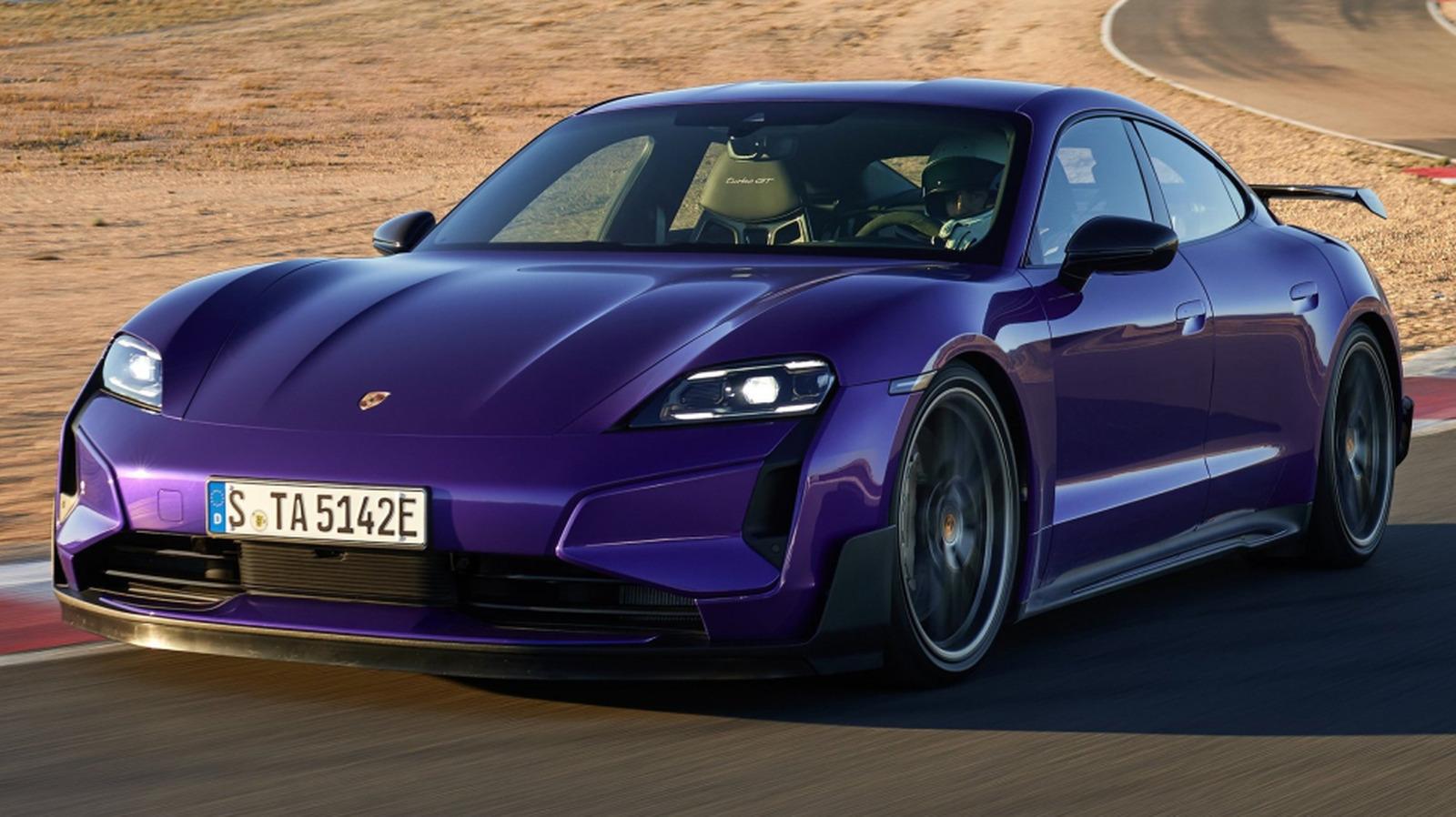
10 EVs That Charge Faster Than A Tesla in 2026: The New Speed Kings
Image: 10 EVs That Charge Faster Than A Tesla in 2026: The New Speed Kings – Performance and Specifications
- Advertisement -
For over a decade, Tesla has been the undisputed king of the electric vehicle (EV) charging narrative. With its massive Supercharger network and the impressive 250kW peak rate of V3 and V4 stalls, the brand became synonymous with fast refills. However, as we enter 2026, the landscape has shifted. While Tesla’s V4 cabinets are capable of higher outputs, the cars themselves—limited by 400V architecture—are increasingly being outpaced by a new generation of high-voltage rivals. Today, vehicles like the Porsche Taycan and the Lotus Emeya are hitting the market with prices starting around $90,000 to $150,000, promising to get you back on the road in less than 18 minutes.
The secret sauce? 800V (and even 900V) electrical architectures. While a Tesla Model 3 or Model Y might take 25 to 30 minutes to go from 10% to 80% battery capacity, the fastest-charging EVs of 2026 can accomplish this in as little as 14 minutes. If you are an EV enthusiast who values time above all else, these are the machines you should be looking at.
- Advertisement -
The Performance of High-Voltage Systems
In 2026, the ‘speed’ of an EV is no longer just about its 0-60 mph time; it is about its ‘miles added per minute’ of charging. Tesla’s peak 250kW rate is impressive, but it tapers off quickly as the battery fills. In contrast, 800V systems from the Hyundai Motor Group and others maintain higher speeds for longer periods, resulting in a much flatter and more efficient charging curve.
Porsche Taycan: The Gold Standard of Rapid Charging
The 2026 Porsche Taycan remains the benchmark. With a peak charging capacity of 320kW, it can jump from 10% to 80% in just 18 minutes under optimal conditions. Porsche has optimized the thermal management system to ensure that the battery is always at the perfect temperature to accept maximum current, solving one of the biggest ‘cons’ users reported in earlier EV models.
Lucid Air: The King of Miles Per Minute
The Lucid Air isn’t just a luxury sedan; it’s a technical marvel. Utilizing a 900V+ architecture, the Air Sapphire and Grand Touring models can add up to 200 miles of range in just 12 minutes. With a price point starting near $70,000 for the base models and scaling to over $250,000, it targets the high-end consumer who demands zero compromises in efficiency.
- Advertisement -
Hyundai Ioniq 6: The Budget-Friendly Speedster
You don’t need to spend six figures to beat a Tesla at the charger. The 2026 Hyundai Ioniq 6, starting at roughly $43,000, utilizes the E-GMP platform. It supports 350kW DC fast chargers and can charge from 10% to 80% in roughly 18 minutes. This remains the most significant threat to the Tesla Model 3’s dominance in the mass market.
Lotus Emeya: The 400kW Monster
The Lotus Emeya hyper-GT is pushing the boundaries of what is physically possible. In 2026 testing, the Emeya has been clocked at peak rates of 400kW. This allows for a 10-80% charge in a staggering 14 minutes. While it requires a specific ultra-fast charger (increasingly common in Europe and China), it represents the pinnacle of current charging technology.
Kia EV6 GT: Performance Meets Practicality
The Kia EV6 GT offers the same 800V benefits as its Hyundai cousins but in a more aggressive, driver-focused package. Even in 2026, its ability to pull 233kW consistently makes it a faster-charging option than a Tesla Model Y, which often struggles to maintain its peak rate past the 40% state-of-charge mark.
- Advertisement -
Comparison: 2026 Charging Speed Leaders vs. Tesla
| Model | Peak Charging Rate | 10-80% Charge Time | Architecture | 2026 Starting Price |
|---|---|---|---|---|
| Tesla Model S Plaid | 250 kW | 28-30 Mins | 400V | $89,990 |
| Porsche Taycan (Gen 2) | 320 kW | 18 Mins | 800V | $101,000 |
| Lucid Air Grand Touring | 300+ kW | 15 Mins | 900V+ | $110,000 |
| Hyundai Ioniq 6 | 235 kW | 18 Mins | 800V | $43,500 |
Detailed Technical Specifications: The Fast-Charging Elite
| Feature | Lucid Air Sapphire | Porsche Taycan Turbo S | Lotus Emeya |
|---|---|---|---|
| Battery Capacity | 118 kWh | 105 kWh | 102 kWh |
| Max Charging Speed | 300 kW | 320 kW | 400 kW |
| Range (EPA Est.) | 427 Miles | 310 Miles | 315 Miles |
| 0-60 MPH | 1.89 Seconds | 2.3 Seconds | 2.78 Seconds |
| Onboard Charger | 19.2 kW (AC) | 11 kW (AC) | 22 kW (AC) |
2026 Variant-Wise Pricing (Estimated Ex-Showroom)
| Vehicle Variant | Estimated Price (USD) | Key Charging Highlight |
|---|---|---|
| Hyundai Ioniq 6 SE | $43,500 | Fastest charging under $45k |
| Kia EV9 GT-Line | $75,000 | Fastest charging 3-row SUV |
| Porsche Taycan Base | $101,000 | Standard 800V across all trims |
| Lucid Air Pure | $71,500 | Superior efficiency per kWh |
| Lotus Emeya R | $145,000 | World-leading 400kW peak |
People Also Ask (FAQs)
- Which EV charges the fastest in 2026? The Lotus Emeya currently leads with a 400kW peak charging rate.
- Does Tesla have 800V charging? As of 2026, the Cybertruck uses an 800V system, but the Model 3, Y, S, and X still largely rely on 400V architecture.
- Why do 800V cars charge faster? Higher voltage allows for more power (kW) to be delivered at lower amperage, reducing heat and allowing for sustained high speeds.
- Can I charge a Porsche Taycan at a Tesla Supercharger? Yes, with the NACS adapter or at Magic Dock stations, though speeds may be limited by the stall’s voltage output.
- Is fast charging bad for the battery? Modern 2026 EVs use advanced thermal management to minimize degradation during fast charging.
- What is the cheapest fast-charging EV? The Hyundai Ioniq 6 and Kia EV6 are the most affordable vehicles with 800V fast-charging capabilities.
- Does cold weather affect charging speed? Yes, but most 2026 EVs include battery pre-conditioning to warm the battery before arrival at a charger.
- How long does a Tesla take to charge 10-80%? Usually between 27 and 32 minutes at a V3 Supercharger.
- What is a ‘charging curve’? It is a graph showing how charging speed drops as the battery gets fuller. 800V cars have ‘flatter’ curves.
- Are 400kW chargers common? They are expanding rapidly in 2026, especially along major highways and through networks like Electrify America and IONITY.
Verdict: Should You Buy a Non-Tesla for Charging Speed?
Should you buy it? If your lifestyle involves frequent long-distance road trips and you value minimizing downtime, Yes. While Tesla offers the most reliable software and network integration, the hardware of rivals like Hyundai, Porsche, and Lucid is objectively superior in terms of raw charging physics.
Pros
- Significantly shorter wait times (under 20 minutes).
- Better thermal management and sustained power delivery.
- Future-proofed for the next generation of 350kW+ chargers.
Cons
- Non-Tesla charging infrastructure can still be hit-or-miss in rural areas.
- Higher entry price for premium brands like Lucid and Porsche.
- 800V components can be more expensive to repair out of warranty.