The Disruptive Arrival of the TVS Orbiter V1 in 2026
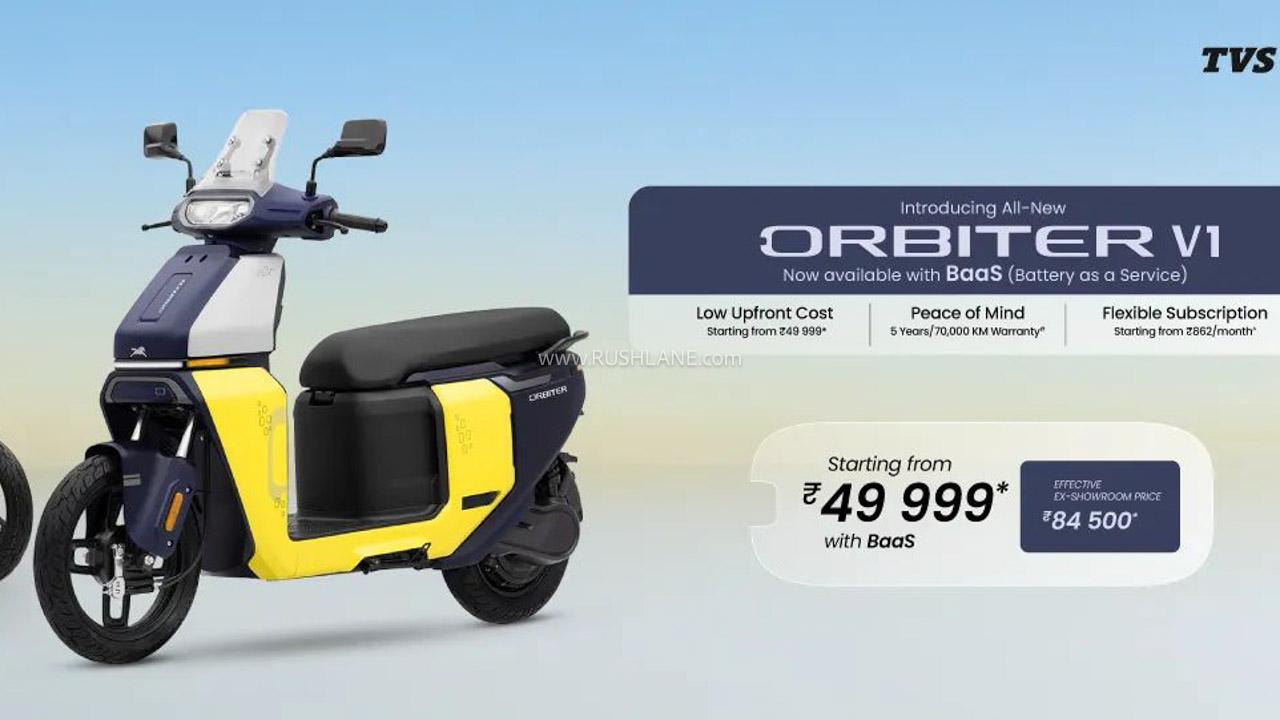
2026 TVS Orbiter V1 Launched at ₹49,999: Is the BaaS Model a Game Changer for Budget EV Buyers?
Image: 2026 TVS Orbiter V1 Launched at ₹49,999: Is the BaaS Model a Game Changer for Budget EV Buyers? – Performance and Specifications
- Advertisement -
In a move that has sent shockwaves through the electric two-wheeler industry, TVS Motor Company has officially launched the new base variant of the TVS Orbiter V1. Positioned as a direct assault on the entry-level ICE (Internal Combustion Engine) market, the Orbiter V1 is now available at an eye-watering starting price of Rs 49,999. This aggressive pricing is made possible through the innovative Battery as a Service (BaaS) model, where owners pay for the vehicle upfront and subscribe to a battery plan for just Rs 862 per month. This strategy mirrors the success seen in the four-wheeler segment and aims to make premium electric mobility accessible to the masses.
The BaaS Revolution: How TVS is Lowering Entry Barriers
The primary hurdle for EV adoption has always been the high initial acquisition cost, largely due to battery prices. By decoupling the battery from the vehicle price, TVS has effectively brought the Orbiter V1’s sticker price down to that of a 100cc commuter bike. Users benefit from a lifetime battery warranty and the flexibility of upgrading tech as battery chemistry evolves, all while paying a monthly fee that is often lower than a typical petrol bill.
- Advertisement -
Design and Build Quality: Premium DNA at a Budget Price
Despite its ‘base variant’ tag, the TVS Orbiter V1 does not look like a compromise. It retains the futuristic, sharp-edged silhouette that defined the original prototype. The 2026 model features high-quality plastics and a robust frame designed for the rigors of Indian urban commuting.
Aesthetics and Ergonomics
The Orbiter V1 features a ‘floating’ headlamp design with signature LED DRLs. The seating position is upright, catering to daily commuters, while the floorboard is spacious enough to carry groceries or a laptop bag. Users on forums have praised the ‘heft’ of the vehicle, noting that it feels significantly more premium than its plastic-heavy competitors in the sub-60k segment.
Chassis and Suspension
Equipped with telescopic front forks and a twin-rated rear shock absorber, the Orbiter is tuned for comfort over broken patches of tarmac. The 12-inch alloy wheels come wrapped in low-rolling-resistance tires to maximize the efficiency of the 2.2 kWh battery pack used in this variant.
- Advertisement -
Performance and Tech: What Does Rs 49,999 Get You?
Under the skin, the TVS Orbiter V1 base variant utilizes a 3kW (Peak) BLDC hub motor. While it isn’t a track monster, it is tuned for the ‘stop-and-go’ nature of city traffic. The 2026 update includes optimized regenerative braking, which users claim adds a noticeable 5-7% back to the range during heavy congestion.
| Feature | TVS Orbiter V1 (Base) | Ola S1 X (2kWh) | Ather 450S (2026 Ed.) |
|---|---|---|---|
| Price (Ex-Showroom) | ₹49,999 (+BaaS) | ₹74,999 | ₹92,000 |
| Certified Range | 105 km | 91 km | 115 km |
| Top Speed | 75 km/h | 85 km/h | 90 km/h |
| 0-40 km/h | 4.2 Seconds | 4.1 Seconds | 3.9 Seconds |
| Battery Warranty | Lifetime (via BaaS) | 8 Years/80k km | 5 Years/60k km |
Connectivity and Instrument Cluster
The base variant features a 5-inch digital negative LCD. While it lacks the full-color TFT of the higher trims, it still offers Bluetooth connectivity through the TVS SmartXonnect app. This allows for turn-by-turn navigation, call alerts, and a unique ‘Carbon Saver’ score that tracks your environmental impact in real-time.
Safety Standards and Battery Reliability
Safety has become a non-negotiable in 2026. TVS has equipped the Orbiter V1 with an IP67-rated battery pack, ensuring it can handle water wading during monsoon seasons. The scooter follows the latest Bharat NCAP-2W safety guidelines, featuring a Combi-Braking System (CBS) and side-stand cut-off sensors as standard.
- Advertisement -
Technical Specifications Table
| Specification | Details | ||
|---|---|---|---|
| Motor Type | BLDC Hub Motor | Peak Power | 3.0 kW |
| Battery Capacity | 2.2 kWh (LFP) | ||
| Charging Time (0-80%) | 3.5 Hours | ||
| Braking (Front/Rear) | 220mm Disc / 130mm Drum | ||
| Kerb Weight | 108 kg | ||
| Ground Clearance | 165 mm |
Variant-Wise Pricing for 2026
| Variant | Pricing Model | Ex-Showroom Price |
|---|---|---|
| Orbiter V1 Base | BaaS (Subscription) | ₹49,999 |
| Orbiter V1 Plus | Battery Included | ₹98,500 |
| Orbiter V1 Pro | Battery Included (Fast Charge) | ₹1,15,000 |
People Also Ask (FAQs)
1. What is the actual monthly cost of the TVS Orbiter V1 BaaS?
The monthly battery subscription is ₹862. This covers battery maintenance, software updates, and a lifetime replacement guarantee if the health drops below 70%.
2. Can I buy the Orbiter V1 without the BaaS model?
Yes, the Plus and Pro variants come with the battery included in the upfront cost, starting at ₹98,500.
3. What is the real-world range of the 2026 TVS Orbiter V1?
While the certified range is 105 km, users report a consistent real-world range of 80-85 km in ‘Eco’ mode and 65 km in ‘Power’ mode.
- Advertisement -
4. How long does it take to charge the Orbiter V1?
Using the standard 500W home charger, it takes about 3.5 hours to go from 0 to 80%. A full 100% charge takes roughly 4.5 hours.
5. Is the battery removable for home charging?
No, the Orbiter V1 uses a fixed battery design to ensure structural integrity and better heat dissipation.
6. Does the ₹49,999 price include the charger?
Typically, the home charger is sold as a separate accessory or bundled as a launch offer. Check with your local TVS iQube/Orbiter dealer for current bundles.
- Advertisement -
7. What is the top speed of the base variant?
The top speed is electronically limited to 75 km/h to preserve battery longevity under the BaaS model.
8. Are there any hidden charges in the BaaS contract?
There is usually a nominal registration fee for the BaaS platform (approx ₹1,500) and a minimum lock-in period of 12 months.
9. How does the BaaS model affect resale value?
The resale value is actually more stable because the new buyer simply takes over the battery subscription, eliminating the fear of ‘dead battery’ replacement costs.
- Advertisement -
10. Is the TVS Orbiter V1 eligible for FAME-III subsidies?
As of 2026, the pricing already reflects state-level incentives and the current applicable central subsidies.
The Verdict: Should You Buy the TVS Orbiter V1?
The 2026 TVS Orbiter V1 is a strategic masterpiece. By launching at ₹49,999, TVS has removed the biggest barrier to EV ownership. While the monthly ₹862 fee is a recurring cost, it provides peace of mind regarding battery health—a major concern for long-term owners.
Pros:
– Unbeatable upfront price for a premium brand.
– Lifetime battery warranty via BaaS.
– Excellent build quality and TVS service network.
– Smooth, silent performance ideal for city commutes.
- Advertisement -
Cons:
– Subscription fatigue (monthly payments).
– Limited top speed compared to mid-range rivals.
– No fast-charging on the base variant.
Final Thoughts: If you are a city commuter looking to switch from a petrol scooter and want to avoid the ₹1 lakh+ investment, the Orbiter V1 is currently the most sensible choice in the Indian market.
- Advertisement -