The Tesla FSD Dilemma: Innovation or Illusion in 2026?
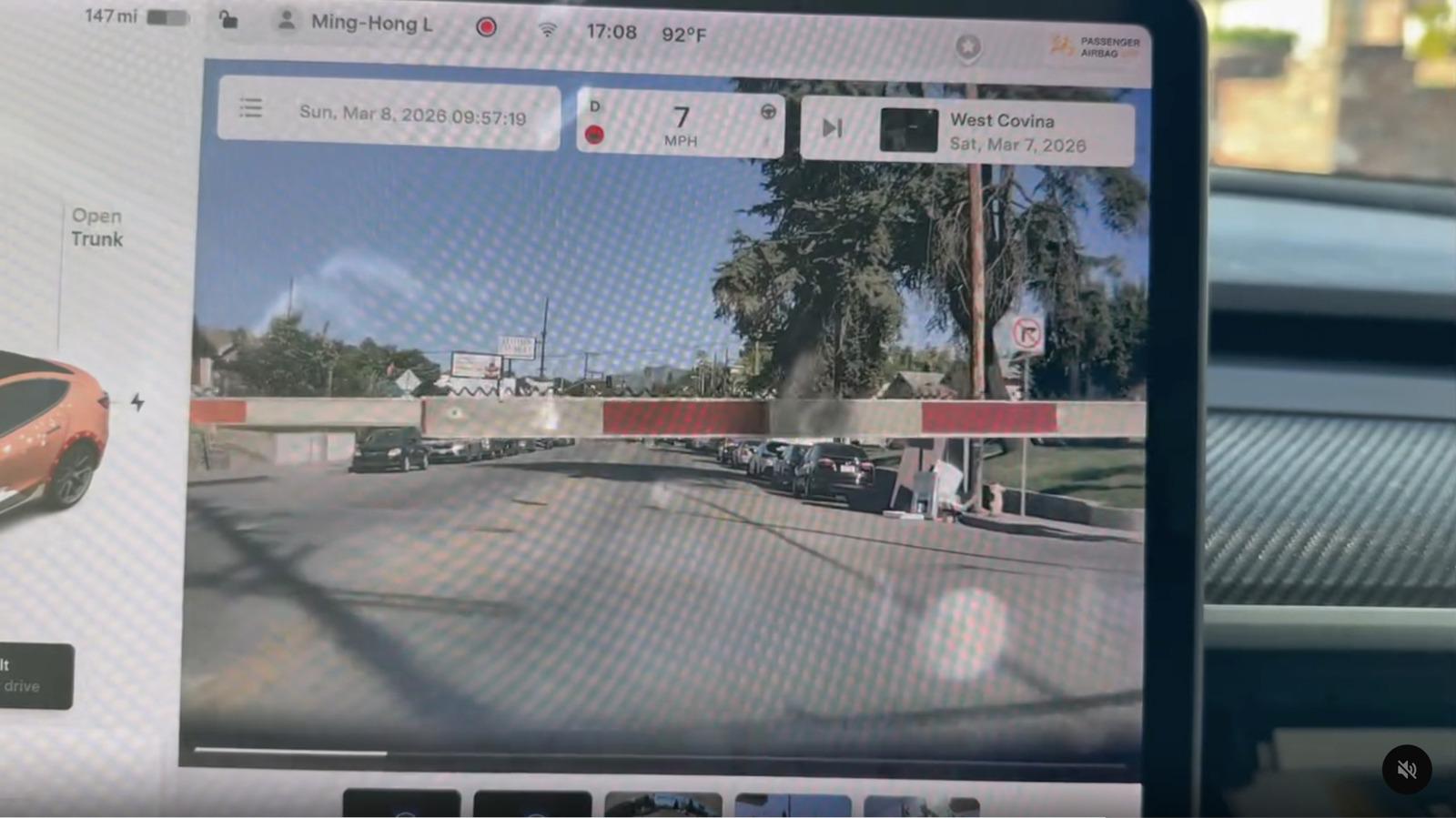
2026 Tesla Model 3 FSD Review: Why Rail Crossings Still Terrify the World’s Smartest Car?
Image: 2026 Tesla Model 3 FSD Review: Why Rail Crossings Still Terrify the World’s Smartest Car? – Performance and Specifications
- Advertisement -
Imagine cruising at 60 mph, hands hovering near the wheel, trusting $12,000 worth of sophisticated software to navigate your commute, only to have it steer you directly onto active railroad tracks. For many, the 2026 Tesla Model 3 remains the gold standard of electric mobility, starting at an aggressive price of $38,990. However, recent incidents involving the ‘Full Self-Driving’ (FSD) Supervised v13.x software have reignited a fierce debate: is Tesla’s vision-only approach fundamentally flawed when it comes to critical infrastructure like railroad crossings?
The ‘Meat’: Design, Tech, and the AI5 Revolution
The 2026 Tesla Model 3 continues the ‘Highland’ evolution but introduces the much-anticipated Hardware 5 (AI5). This new suite offers 10x the processing power of the previous generation, yet the core philosophy remains ‘Vision-Only.’ By removing ultrasonic sensors and radar, Tesla relies entirely on high-resolution cameras to interpret the world. While this makes for a sleek, sensor-free exterior design, critics argue that ‘ghost braking’ and ‘track blindness’ remain persistent issues.
- Advertisement -
Hardware 5 (AI5): Is Vision-Only Enough?
Tesla’s 2026 updates focus heavily on the AI5 computer. The new chips are designed to process neural net pathing at lightning speeds, theoretically allowing the car to ‘see’ and ‘think’ like a human. However, human drivers recognize the universal sign of a railroad crossing—the crossbuck or the flashing lights—whereas FSD has occasionally been documented attempting to traverse tracks even when a train is visible. Users on forums like Reddit and TMC report that while highway driving is near-perfect, complex rural crossings still trigger ‘unpredictable behavior.’
Interior Tech: The Minimalist Cockpit Evolution
Inside, the 2026 Model 3 doubles down on minimalism. There are no stalks for turn signals or gear shifting; everything is handled via the 15.4-inch central touchscreen or steering wheel buttons. New for 2026 is an enhanced 8-inch rear display with integrated gaming capabilities and independent Bluetooth headphone support, ensuring that while the driver monitors the FSD, passengers remain fully entertained.
Performance: Faster, Longer, Smoother
The Long Range AWD variant now boasts an EPA-estimated range of 345 miles, thanks to improved battery chemistry and aerodynamic wheel designs. The 0-60 mph sprint for the Performance trim remains a staggering 2.9 seconds, making it one of the quickest cars in its price bracket. A new frequency-selective damping system provides a ride quality that finally rivals European luxury sedans.
- Advertisement -
Safety First: NCAP Ratings and FSD Reality
The 2026 Tesla Model 3 maintains its 5-star rating across all categories from the Euro NCAP and IIHS. Its structural integrity is world-class, but the ‘Safety’ of its software is under a microscope. Tesla maintains that FSD is safer than a human driver by the numbers, but the ‘edge cases’—like railroad tracks and construction zones—continue to pose significant liability risks.
The Comparison: 2026 Tesla Model 3 vs. Rivals
| Feature | 2026 Tesla Model 3 | 2026 BYD Seal | 2026 BMW i4 |
|---|---|---|---|
| Base Price | $38,990 | $36,500 | $53,000 |
| Autonomy Suite | FSD (Vision Only) | DiPilot 600 (LiDAR) | Driving Assistant Pro |
| 0-60 mph | 2.9 – 5.8s | 3.8 – 7.2s | 3.7 – 5.5s |
| Max Range | 345 Miles | 320 Miles | 310 Miles |
Technical Specifications & Pricing
Table 1: Full Technical Specifications (2026)
| Motor Configuration | Single Motor (RWD) / Dual Motor (AWD) |
| Battery Type | LFP (Standard) / Nickel Cobalt (Long Range) |
| Charging Speed | Up to 250 kW (Supercharger V4) |
| Wheels | 18″ Photon or 19″ Nova |
| Ground Clearance | 138 mm |
Table 2: Variant-wise Pricing (Ex-Showroom Est.)
| Variant | Estimated Price (USD) | Key Highlight |
|---|---|---|
| Standard Range RWD | $38,990 | LFP Battery Longevity |
| Long Range AWD | $47,490 | 345-mile Range |
| Performance (Ludicrous) | $54,990 | Track Mode & 510 HP |
People Also Ask (FAQ)
- Is Tesla FSD safe at railroad crossings in 2026? While improved, recent reports suggest FSD can still struggle with depth perception at tracks; driver supervision is mandatory.
- What is the price of FSD in 2026? It currently costs $12,000 as a one-time purchase or a $99/month subscription.
- Does the 2026 Model 3 have a tax credit? Only the Performance trim currently qualifies for the full $7,500 Federal Tax Credit in the US.
- How long does it take to charge at a V4 Supercharger? You can add 175 miles of range in approximately 15 minutes.
- Does the 2026 Model 3 have Apple CarPlay? No, Tesla continues to use its proprietary software interface.
- Is Hardware 5 (AI5) retrofittable to older Teslas? No, AI5 requires significant power and cooling changes not compatible with HW3 or HW4 vehicles.
- What is the top speed of the 2026 Model 3 Performance? It is electronically limited to 163 mph.
- Does it have a spare tire? No, Tesla provides a tire repair kit instead.
- What are the color options for 2026? New options include ‘Ultra Red’ and ‘Lunar Silver.’
- Is the steering wheel a yoke or round? A round wheel is standard, but the Yoke is available as an optional retrofit.
Verdict: Should You Buy It?
The 2026 Tesla Model 3 is a masterclass in efficiency and performance. If you want the best EV charging network and a car that feels like a smartphone on wheels, there is no better choice. However, if you are buying it specifically for the ‘Full Self-Driving’ promise, proceed with caution. The software is a brilliant assistant but a flawed master—especially when trains are involved.
Pros
- Unmatched Supercharger Network
- Class-leading efficiency and range
- Superior infotainment system
Cons
- Vision-only system struggles in complex scenarios (Railroads)
- Lack of physical stalks is polarizing
- FSD remains an expensive beta product
- Advertisement -