The New Era of Silent Sophistication: Luxury EVs in 2026
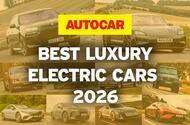
2026 Best Luxury Electric Cars: Is the BMW i7 Still the King of Opulence? Ranked & Rated
Image: 2026 Best Luxury Electric Cars: Is the BMW i7 Still the King of Opulence? Ranked & Rated – Performance and Specifications
Advertisement
It wasn’t that long ago that walking into a dealership and asking for a high-end electric vehicle would result in a confused stare. Fast forward to 2026, and the landscape has shifted entirely. Luxury is no longer defined by the number of cylinders under the hood, but by the silence of the cabin, the speed of the processor, and the sustainability of the leather. With prices starting from approximately ₹1.20 Crore and soaring up to ₹4.50 Crore for flagship editions, the 2026 luxury EV market is the new playground for the elite. This year, we’ve seen a massive influx of solid-state battery tech and Level 3 autonomous driving, making these machines more than just cars—they are mobile sanctuaries.
The Top Contenders: Who Leads the Pack?
The 2026 lineup is dominated by German engineering, but American innovation and British bespoke luxury are hot on their heels. While the BMW i7 continues to set the benchmark for interior richness, rivals like the refreshed Mercedes-Benz EQS and the performance-heavy Porsche Taycan offer compelling alternatives for different types of buyers.
Advertisement
BMW i7: The Pinnacle of Rear-Seat Luxury
The 2026 BMW i7 remains the gold standard for executive transport. BMW has updated the 2026 model with the ‘BMW Panoramic Vision’ head-up display that spans the entire windshield. However, the showstopper remains the 31.3-inch 8K Theater Screen that drops from the ceiling. Under the skin, the i7 M70 variant now pushes nearly 660hp, providing effortless momentum. Users on luxury forums praise the ‘Cloud-like’ ride quality provided by the updated two-axle air suspension, though some complain about the polarizing ‘Crystal’ interior elements being a bit too flashy.
Mercedes-Benz EQS: The Aerodynamic Efficiency King
After receiving a significant facelift for the 2026 model year, the EQS has ditched its ‘jellybean’ look for a more traditional upright grille—a move highly requested by traditional S-Class owners. The ‘Hyperscreen’ is now brighter and more responsive, thanks to a new AI-driven OS. The biggest win for 2026 is the improved rear-seat package, which now includes reclining footrests and neck heating, finally matching the comfort levels of its petrol-powered sibling.
Porsche Taycan: The Driver’s Choice
For those who prefer the steering wheel to the back seat, the 2026 Porsche Taycan remains unbeatable. With the 2026 ‘Turbo GT’ variants utilizing lightweight carbon components and a revised 800V architecture, charging from 10% to 80% now takes just 16 minutes at compatible stations. It’s the sharpest handling EV on the market, though critics still point out that the rear legroom is cramped compared to the i7 or Lucid Air.
Advertisement
Audi Q8 e-tron: The Sensible Luxury SUV
While sedans rule the limo class, the Q8 e-tron dominates the luxury SUV space. For 2026, Audi has refined the energy density of its battery packs, pushing the real-world range past the 600km mark. It offers the most ‘normal’ transition from an ICE vehicle to an EV, featuring physical buttons for critical functions—something many users find refreshing amidst the ‘touchscreen-everything’ era.
Lucid Air: The Range and Space Master
The Lucid Air continues to embarrass the established players when it comes to efficiency. The 2026 Sapphire edition offers over 800km of range on a single charge. Its ‘Space Concept’ design provides the interior room of a long-wheelbase limousine within the footprint of a mid-size sedan. In 2026, Lucid has finally expanded its service network in India, making it a viable alternative to the German trio.
Safety and Tech: 5-Star Standards
In 2026, luxury is synonymous with safety. All vehicles on this list carry a 5-star Euro NCAP and Global NCAP rating. The 2026 updates include ‘Pre-Safe Impulse Side’ technology in the Mercedes EQS, which uses air chambers in the seats to push occupants toward the center of the car during a side impact. The BMW i7 now features an ‘Active Driving Assistant Pro’ that allows for hands-free driving on designated highways at speeds up to 130 km/h.
Advertisement
The Comparison: Battle of the Flagships
To help you decide, we have compared the three most popular luxury EVs currently available in the Indian market for 2026.
| Feature | BMW i7 (2026) | Mercedes EQS (2026) | Porsche Taycan (2026) |
|---|---|---|---|
| Battery Capacity | 101.7 kWh | 118 kWh | 105 kWh |
| Claimed Range (WLTP) | 625 km | 780 km | 630 km |
| 0-100 km/h | 3.7 Seconds (M70) | 3.3 Seconds (AMG) | 2.2 Seconds (Turbo GT) |
| Top Speed | 250 km/h | 250 km/h | 305 km/h |
| Rear Seat Comfort | Best-in-class (Theater Screen) | Excellent (Executive Package) | Average |
Technical Specifications (Top-Spec Variants)
| Specification | Detail |
|---|---|
| Drivetrain | Dual Motor AWD / Tri-Motor (Lucid/Tesla) |
| Charging Time (DC Fast) | 10% to 80% in 18-31 mins |
| Suspension | Adaptive Air Suspension with Scan-Ahead Tech |
| Wheelbase | 3,000 mm to 3,215 mm |
| Sound System | Bowers & Wilkins / Burmester 4D (30+ Speakers) |
2026 Variant-Wise Pricing (Estimated Ex-Showroom India)
| Model Variant | Estimated Price (INR) |
|---|---|
| Audi Q8 e-tron 55 | ₹1.25 Crore |
| BMW i7 xDrive60 | ₹2.15 Crore |
| Mercedes-Benz EQS 580 | ₹1.75 Crore |
| Porsche Taycan Turbo GT | ₹3.50 Crore |
| Rolls-Royce Spectre | ₹7.50 Crore |
People Also Ask (FAQ)
1. Which luxury EV has the longest range in 2026?
The Lucid Air Grand Touring and the Mercedes-Benz EQS currently lead the market with real-world ranges exceeding 700-750 km.
2. How long does it take to charge a luxury EV at home?
Using a 22kW AC wall box charger, most luxury EVs take between 5 to 9 hours for a full charge.
Advertisement
3. Are luxury EVs better than their petrol counterparts?
Yes, in terms of refinement, instantaneous torque, and lower maintenance. However, petrol cars are still preferred for extreme long-distance touring in areas with poor charging infrastructure.
4. Does the BMW i7 have a sunroof?
The i7 features a Sky Lounge panoramic glass roof with integrated LED light threads, though it does not slide open.
5. What is the battery warranty on these cars?
Most manufacturers like BMW and Mercedes offer an 8-year or 1,60,000 km warranty on the battery pack.
Advertisement
6. Do electric cars lose value faster?
Historically, yes. However, in 2026, as EV adoption grows, the resale value of top-tier luxury EVs is stabilizing.
7. Which luxury EV is the fastest?
The Tesla Model S Plaid and the Porsche Taycan Turbo GT are currently the fastest, both hitting 100 km/h in under 2.5 seconds.
8. Can I use a Tesla Supercharger for my BMW i7?
Yes, in 2026, most manufacturers have adopted the NACS standard or have agreements to use Tesla’s Supercharger network.
Advertisement
9. Is the Mercedes EQS rear seat comfortable?
With the 2026 update, the rear seat comfort has been significantly improved with better cushioning and reclining angles.
10. Are there any electric Rolls-Royce models?
Yes, the Rolls-Royce Spectre is the brand’s flagship electric coupe and is considered the quietest car in the world.
Verdict: Should You Buy a Luxury EV in 2026?
If you are looking for the ultimate statement in status and technology, the answer is a resounding YES. The 2026 crop of luxury EVs has eliminated the ‘compromise’ factor. They are faster, quieter, and more tech-forward than any internal combustion engine car.
Advertisement
Pros:
– Unrivaled cabin silence and refinement.
– Cutting-edge tech like 8K screens and Level 3 ADAS.
– Zero tailpipe emissions and lower running costs.
– Instantaneous power delivery.
Cons:
– Extremely high initial purchase price.
– Public charging infrastructure still maturing in rural areas.
– Heavy curb weight affects tire wear.
Our Pick: If you are chauffeur-driven, the BMW i7 is the winner. If you want to drive yourself, the Porsche Taycan is the one to put in your driveway.
Advertisement